CO-IN Lifetime Achievement Award
CO-IN's highest honor

Presented annually to a distinguished scientist whose transformative contributions have profoundly advanced the chemical sciences and inspired generations of researchers.
Award Details
Award Includes
- Commemorative medal of honor
- Plenary lecture at the CO-IN Annual Symposium
- Stay at the conference venue hotel
- Complimentary conference registrations for all the conferences under CO-IN Symposia
- Profile feature on the CO-IN website and in COIN publications
Eligibility
Open to senior scientists with a sustained record of groundbreaking contributions.
About the Award
The CO-IN Lifetime Achievement Award honors scientists whose career-long contributions have reshaped the landscape of chemical sciences through innovation, leadership, mentorship, and sustained scholarly excellence.
As CO-IN's highest distinction, this award recognizes individuals whose research has created lasting impact across disciplines and whose influence continues to inspire current and future generations of scientists worldwide.
The award is presented annually as part of the CO-IN Symposia platform and celebrates extraordinary achievement, service to science, and dedication to advancing the global scientific community.
Previous Recipients
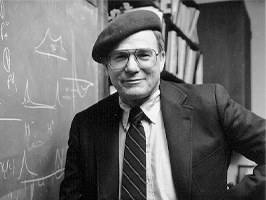
Professor William Andrew Goddard III
Charles and Mary Ferkel Professor of Chemistry, Materials Science, and Applied Physics, California Institute of Technology, Pasadena, CA
Research Overview: Goddard has been a pioneer in developing methods for quantum mechanics (QM), force fields (FF), reactive dynamics (ReaxFF RD), electron dynamics (eFF), molecular dynamics (MD), and Monte Carlo (MC) predictions on chemical, catalytic, and biochemical materials systems.
Research Summary: New methodology for quantum mechanics of materials, reactive force fields for multiscale reactive simulations, nanotechnology, fuel cells, batteries, photoelectrocatalysis and electrocatalysis, pharma, and bulk amorphous metal alloys.
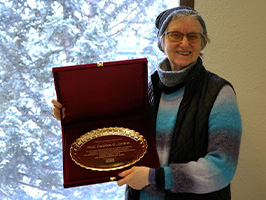
Professor Debbie C. Crans
Distinguished Professor, Colorado State University, Fort Collins, CO
Professor Debbie Crans was honored with a Lifetime Achievement Award at the International Conference on Catalysis and Reaction Engineering. Crans was recognized for her groundbreaking contributions in the fields of bio and organic chemistry, biochemistry, and chemical biology.
The award showcases how Crans dedicated her life to fostering the next generation of scientists. As a professor at Colorado State University, she has mentored countless students and postdoctoral researchers, encouraging them to think critically, collaborate openly, and aim high.
Source: Read more
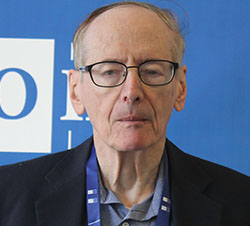
Professor Tobin J. Marks
Charles E. and Emma H. Morrison Professor of Chemistry, Professor of Materials Science and Engineering, Vladimir N. Ipatieff Professor of Catalytic Chemistry, Northwestern University, Evanston, IL
Research Statement: Among the themes of our research are sustainable and unsolved homogeneous and heterogeneous catalytic transformations, single-site surface catalysts, exploratory organo-f-element and early-transition metal organometallic chemistry, novel polymer design and synthesis, flexible, stretchable, and printable electronics, metal oxide electronics, new solar energy materials, molecule-based photonic materials, superconductivity, metal-organic chemical vapor deposition, and biological aspects of transition metal chemistry.
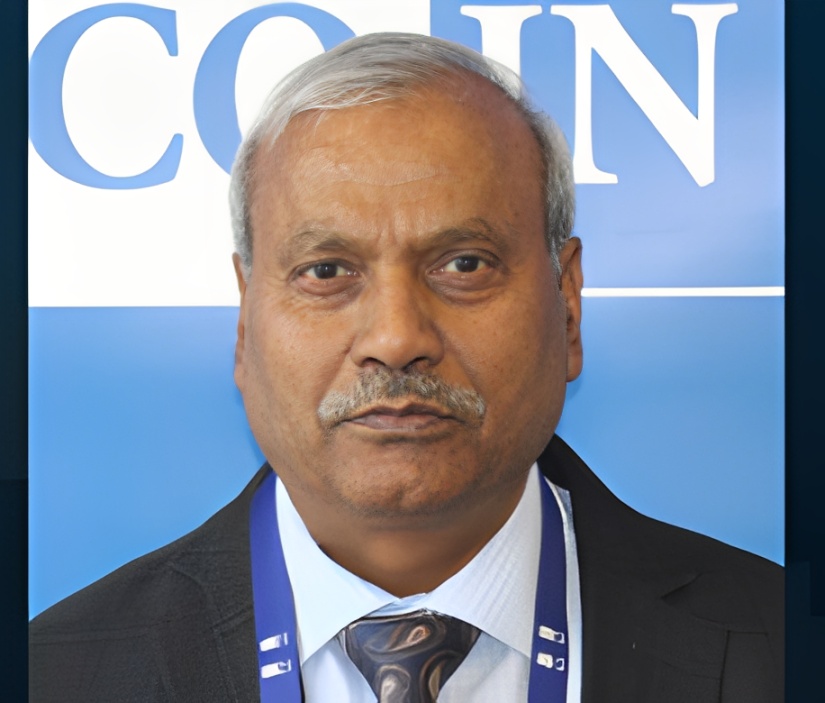
Professor Mannar R. Maurya
Professor of Chemistry, Indian Institute of Technology Roorkee, India
Professor Maurya is a highly respected academician and researcher, widely acknowledged for his seminal contributions to coordination chemistry, bioinorganic chemistry, and catalysis, particularly in the area of transition metal complexes and their applications in oxidation processes and biologically relevant molecules.
His scholarly work has significantly advanced fundamental research and has earned national and international recognition.
Over the course of an illustrious academic career spanning several decades, Professor Maurya has made enduring contributions as a teacher, mentor, and researcher. He has supervised 33 doctoral and more than 100 postgraduate students and has published extensively in reputed international journals.
His commitment to academic excellence has played a pivotal role in strengthening chemical education and research in India. IIT Roorkee, India has honoured him with an outstanding teacher award.
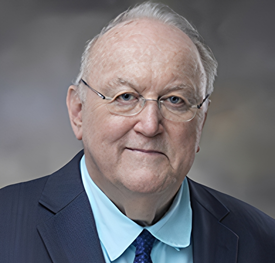
Professor Russel Reiter
Professor, Department of Cell Systems and Anatomy, UT Health San Antonio, San Antonio, TX
Dr. Russel Reiter teaches in the Introduction to Research and in Journal Clubs of several departments. He is the Editor-in-Chief of Melatonin Research and on the Editorial Board of more than 35 other journals.
He is the recipient of numerous awards including three honorary doctor of medicine degrees and the Presidential Distinguished Scholar Award from UT Health San Antonio. He is also on the Clarivate Analytics list of Highly Cited Scientists.
Dr. Reiter's research interests relate to free radical aspects of disease processes and aging. Of particular interest is defining the role of oxygen derivatives in neurodegenerative diseases and their function in apoptosis, necrosis and neuronal degeneration.
These studies typically involve measurements of oxidatively damaged polyunsaturated fatty acids, proteins, and DNA.